2026-07-27
Why You Ignore Every Notification (And What Actually Breaks Through)
You didn't decide to stop noticing your notifications. Your brain did it for you.
The habituation problem
Every notification you've ever swiped away trained your nervous system to do it faster next time. That's basic habituation—the same mechanism that lets you tune out the hum of a refrigerator or the weight of a watch on your wrist. The first time a stimulus appears, it demands attention. The hundredth time, your brain has learned it's safe to ignore, quietly filtering it out before it ever reaches conscious awareness.
A phone that buzzes 60+ times a day is running that experiment on you constantly, and you're losing. Badge counts, banner previews, and lock-screen stacks all blur into the same category of noise. "Check your step count" and "take your medication" get filed into the exact same mental folder: things that appear and demand nothing in particular.
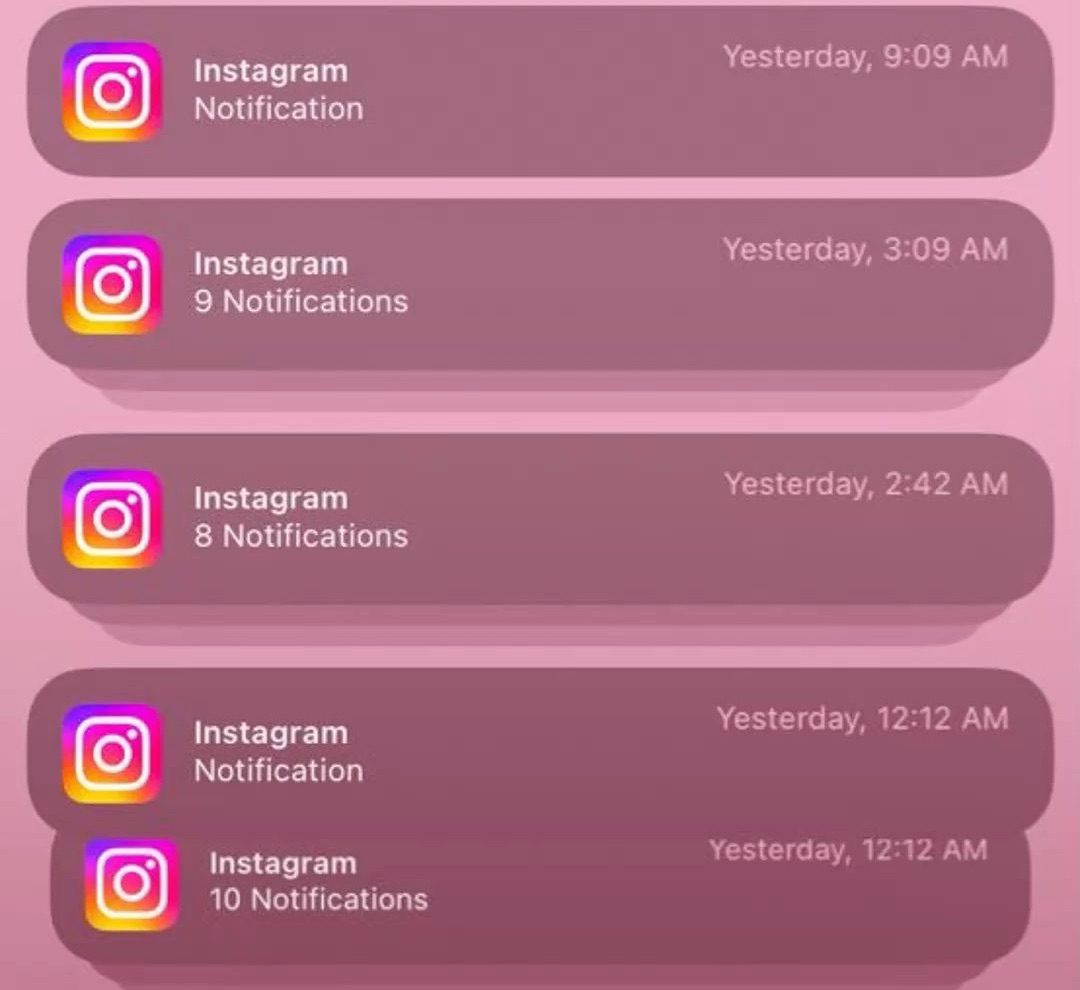
This isn't a willpower failure; it's the inevitable result of a high-frequency, low-stakes signal. For ADHD brains specifically, the effect is even harsher: a nervous system that already struggles to route attention toward tasks without built-in urgency has even less to work with once the stimulus itself flattens into background noise.
Why a phone call breaks through
A ringing phone hasn't been habituated the way a push notification has for one simple reason: you've spent decades treating it as a decision, not a distraction. You either answer it or silence it. There's no 200-millisecond swipe-to-dismiss that requires zero thought.
While most push notifications are intentionally designed to be easily dismissible—a reasonable choice when apps ping you every few minutes—it's the worst possible design for the few things you can't afford to miss. You end up dismissing your top priorities with the same muscle memory you use on promotional spam, simply because the interface gives you no way to distinguish between them in the moment.
A phone call forces the decision back into the open. Volume isn't what makes the difference; the category of interruption is. Your brain simply hasn't learned to autopilot through a ringing phone the way it has through a banner.
Changing the nature of the interruption
Think about what you rely on notifications for: taking medication, making a critical call, or meeting a hard deadline. These are precisely the items a low-stakes notification system fails at handling.
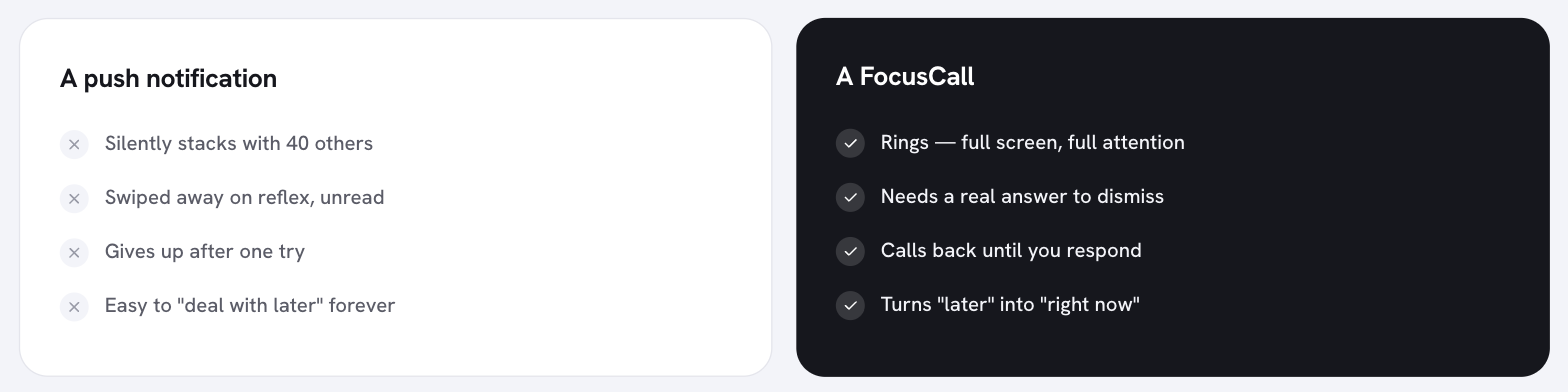
The fix isn't more notifications, louder ringtones, or a redder badge. Volume doesn't undo habituation—it just shifts the baseline, and your brain adapts to new baselines quickly. The real solution is changing the category of the interruption itself: moving from something dismissible on reflex to something that requires an active response.
That's the core idea behind FocusCall. Instead of sending a push notification you'll swipe away without thinking, FocusCall rings your phone when a critical task is due—and keeps ringing until you take action. Press a key to say "I'm on it" or "snooze an hour," and you're done. No apps to open, no growing pile of unread badges to feel guilty about, just a clear, direct signal right when you need it.
If your task list has become a graveyard of ignored reminders, the solution isn't a better reminder. It's a better kind of interruption.